- 1 The Current State of the Cryptocurrency Market
- 2 Bitcoin’s Market Dominance and Recent Performance
- 3 Ethereum and Layer-2 Ecosystem Valuation
- 4 The Rise of Central Bank Digital Currencies (CBDCs)
- 5 DeFi Market Capitalization and Growth
- 6 NFT Market Valuation and Trends
- 7 Regulatory Developments Affecting Crypto Valuation
- 8 Institutional Investment in Cryptocurrency
- 9 Market Volatility Analysis
- 10 Future Outlook for Cryptocurrency Values
- 11 Conclusion
- 12 FAQs
- 12.1 What factors are currently driving Bitcoin’s price in 2025?
- 12.2 How have CBDCs affected the broader cryptocurrency market?
- 12.3 What are the most promising cryptocurrency sectors for investment in 2025?
- 12.4 How has cryptocurrency volatility changed compared to previous market cycles?
- 12.5 What role does environmental impact play in cryptocurrency valuations today?
The Current State of the Cryptocurrency Market
Global Market Capitalization Overview
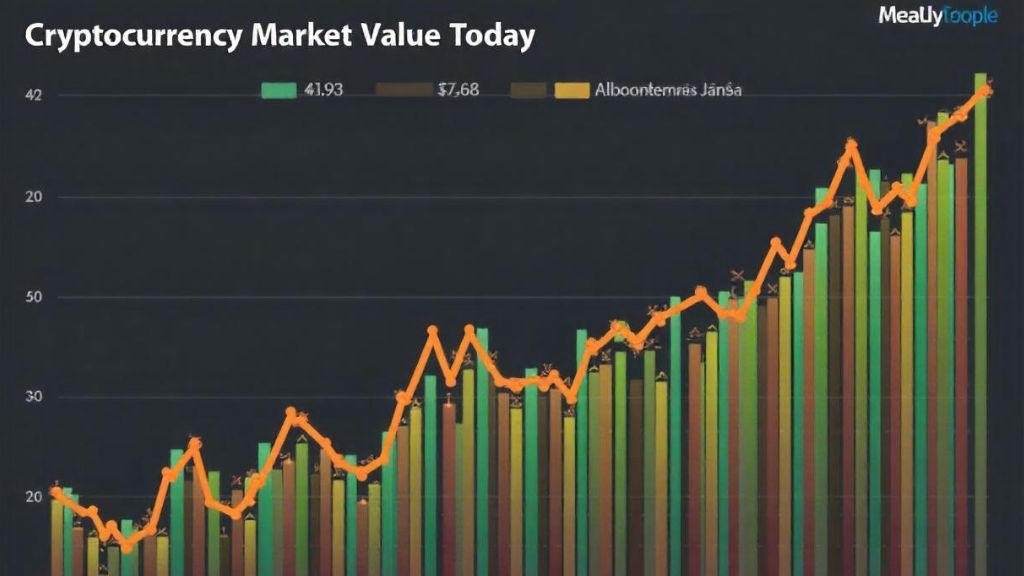
The cryptocurrency market has undergone significant transformation since its humble beginnings with Bitcoin in 2009. As of May 2025, the global cryptocurrency market capitalization stands at approximately $5.8 trillion, representing an extraordinary evolution from just a few years ago. This remarkable growth demonstrates how digital assets have firmly established themselves as a legitimate asset class in the global financial ecosystem.
What’s particularly interesting about today’s market is the distribution of this value across various cryptocurrency sectors. While Bitcoin and Ethereum still command significant portions of the overall market cap, we’re seeing a more diversified landscape than ever before. Layer-1 blockchains, DeFi protocols, infrastructure projects, and specialized utility tokens all contribute meaningful percentages to the total valuation.
The market has matured substantially compared to previous cycles. Daily trading volume regularly exceeds $300 billion across centralized and decentralized exchanges, indicating robust liquidity and participant engagement. Institutional involvement has normalized, with professional trading firms, hedge funds, and even traditional banks actively participating in cryptocurrency markets.
Top Performing Cryptocurrencies in 2025
The landscape of top-performing digital assets has seen interesting developments in 2025. While Bitcoin and Ethereum maintain their positions as the #1 and #2 cryptocurrencies by market capitalization, several other projects have delivered exceptional returns this year.
Solana continues its strong performance, cementing its position in the top five with its high-throughput blockchain attracting developers and users alike. The ecosystem has flourished with DeFi and NFT applications leveraging its speed and low transaction costs.
Interoperability-focused chains have seen remarkable growth, with Polkadot and Cosmos ecosystem tokens performing particularly well. As cross-chain functionality becomes increasingly important for users wanting to access different blockchain environments seamlessly, these projects have captured significant value.
Privacy-focused cryptocurrencies have also experienced renewed interest amid growing concerns about financial surveillance. Monero and newer privacy protocols have appreciated considerably as users seek stronger financial privacy protections.
Web3 infrastructure tokens supporting decentralized computing, storage, and bandwidth have emerged as strong performers, reflecting the market’s recognition of fundamental blockchain utilities beyond simple currency applications.
Bitcoin’s Market Dominance and Recent Performance
Bitcoin, the original cryptocurrency, continues to exert tremendous influence over the broader market. As of May 2025, Bitcoin’s price hovers around $135,000, representing significant growth since the last market cycle. Its market dominance—the percentage of total cryptocurrency market capitalization attributed to Bitcoin—currently stands at approximately 42%, lower than historical highs but still reflecting its position as the dominant digital asset.
The journey to this valuation hasn’t been without volatility. Bitcoin experienced several notable corrections in late 2024 and early 2025, including a sharp 28% drawdown in February before recovering strongly. These price movements continue to influence sentiment across the entire cryptocurrency market, demonstrating Bitcoin’s role as the sector’s primary barometer.
Bitcoin’s on-chain metrics tell an interesting story as well. The percentage of Bitcoin that hasn’t moved in over a year remains near all-time highs, suggesting strong conviction among long-term holders despite price fluctuations. Meanwhile, exchange reserves of Bitcoin continue trending downward, indicating a preference for self-custody and potential supply constraints that could support future price appreciation.
The Impact of the 2024 Halving Event
The Bitcoin halving that occurred in April 2024 has had profound effects on Bitcoin’s market value throughout 2025. This algorithmic reduction of new Bitcoin supply—from 6.25 to 3.125 BTC per block—has historically preceded major bull markets, and the post-2024 halving period has largely followed this pattern.
The reduced issuance rate effectively increased Bitcoin’s stock-to-flow ratio, a metric that quantifies scarcity by comparing existing supply to new production. With daily new issuance now at approximately 450 BTC (worth roughly $60 million at current prices), the selling pressure from miners has diminished significantly compared to pre-halving levels.
Institutional adoption has accelerated in the post-halving environment. Several major corporations added Bitcoin to their treasury reserves in late 2024 and early 2025, citing concerns about inflation and fiat currency debasement. These corporate accumulation programs have absorbed substantial portions of the already-reduced new supply, contributing to upward price pressure.
Mining economics have also shifted dramatically post-halving. Only the most efficient operations with access to low-cost energy have maintained profitability, leading to increased mining decentralization as operations spread to regions with abundant renewable energy sources.
Ethereum and Layer-2 Ecosystem Valuation
ETH 2.0 and Its Effect on Market Value
Ethereum’s successful transition to a fully proof-of-stake network has fundamentally transformed its value proposition and market dynamics. After completing its final upgrade phase in 2024, Ethereum now processes over 100,000 transactions per second through its sharded architecture while maintaining robust security and decentralization.
The economic implications have been profound. ETH’s price currently stands around $12,500, supported by several key factors. First, approximately 30% of all ETH is now staked in the network, earning yields between 3-5% annually. This significant supply reduction creates upward price pressure. Second, Ethereum’s fee-burning mechanism continues to make ETH deflationary during periods of high network activity, with more ETH being destroyed than created in most months of 2025.
Institutional demand for ETH has grown substantially as traditional finance recognizes its dual role as both a productive financial asset (through staking) and as the reserve asset for the broader Ethereum ecosystem. Several ETH-focused exchange-traded products have launched in major financial markets, broadening access for traditional investors.
The improved scalability and reduced transaction costs have also reinvigorated Ethereum’s application layer, with decentralized applications attracting millions of daily active users across finance, gaming, social media, and identity management sectors.
Leading Layer-2 Solutions Market Performance
While Ethereum’s base layer improvements have been substantial, Layer-2 scaling solutions continue to play a crucial role in the ecosystem’s expansion. These protocols, which process transactions off the main Ethereum chain while inheriting its security guarantees, have seen their associated tokens become some of the market’s strongest performers.
Optimistic rollups and zero-knowledge (ZK) rollups represent the two dominant Layer-2 approaches, with each capturing distinct segments of the market. ZK-rollups have gained particular momentum in 2025 due to their superior privacy features and faster withdrawal capabilities. The tokens associated with leading ZK-rollup projects have appreciated by an average of 280% year-to-date.
The total value locked (TVL) across all Layer-2 solutions now exceeds $85 billion, demonstrating the market’s confidence in these scaling technologies. Transaction volume on major Layer-2 networks regularly surpasses that of Ethereum’s base layer, with users attracted by sub-cent transaction fees and near-instant finality.
Interoperability between Layer-2 solutions has improved dramatically through cross-rollup communication protocols, reducing fragmentation and allowing liquidity to flow more efficiently throughout the Ethereum ecosystem. This interconnectedness has enhanced the value proposition of the entire network, benefiting both ETH and Layer-2 token valuations.
The Rise of Central Bank Digital Currencies (CBDCs)
How CBDCs Are Influencing Crypto Market Values
The proliferation of Central Bank Digital Currencies (CBDCs) has introduced a fascinating dynamic to cryptocurrency markets. As of May 2025, over 30 countries have launched CBDCs, with another 40+ in advanced testing phases. These government-issued digital currencies operate alongside traditional cryptocurrencies, creating both challenges and opportunities for the broader digital asset market.
Contrary to early concerns that CBDCs might diminish interest in decentralized cryptocurrencies, their widespread introduction has actually accelerated public understanding and adoption of digital assets broadly. Many users who first experience digital currency through CBDCs subsequently explore truly decentralized alternatives, creating an unexpected onboarding pathway to cryptocurrencies like Bitcoin and Ethereum.
From a valuation perspective, CBDCs have particularly benefited infrastructure cryptocurrencies that provide interoperability solutions. Tokens that facilitate communication and value transfer between CBDCs and traditional cryptocurrencies have seen substantial market appreciation, with several entering the top 50 by market capitalization.
Privacy coins have also gained renewed interest as users become more aware of the surveillance capabilities inherent in most CBDC designs. This privacy-focused segment of the market has grown approximately 145% since the beginning of 2025, outpacing the broader cryptocurrency market.
Major CBDC Projects and Their Market Impact
Among the most influential CBDC implementations, China’s Digital Yuan (e-CNY) leads in terms of user adoption, with over 380 million active users and integration across major payment platforms. Its international expansion efforts, particularly through Belt and Road Initiative countries, have inspired competing projects from Western nations concerned about digital currency influence.
The European Central Bank’s Digital Euro launched in late 2024 and rapidly gained adoption across the Eurozone. Its programmable money features have proven popular for automated payments and conditional transactions, introducing many Europeans to concepts previously associated with smart contract platforms like Ethereum.
The United States has taken a different approach with its FedNow instant payment system working alongside privately-issued regulated stablecoins rather than introducing a direct CBDC. This hybrid model has significantly benefited compliant stablecoin issuers, whose market caps have grown substantially as they fulfill regulated digital dollar functions.
Smaller nations like the Bahamas (Sand Dollar) and Nigeria (e-Naira) have moved beyond the experimental phase to practical implementation, with daily transaction volumes demonstrating sustained adoption. These projects provide valuable data on how CBDCs function in diverse economic environments.

DeFi Market Capitalization and Growth
Top DeFi Protocols by Value Locked
Decentralized Finance (DeFi) continues its remarkable expansion, with the total value locked across all protocols reaching approximately $420 billion as of May 2025. This represents a significant evolution from DeFi’s early days, with much more sophisticated financial infrastructure now available in permissionless, blockchain-based environments.
Lending protocols remain among the largest DeFi categories by value locked. Established platforms have maintained their leadership positions while introducing more capital-efficient lending mechanisms and expanding collateral options. Real-world asset (RWA) tokenization has become a major growth driver, with traditional financial assets like treasury bonds, corporate debt, and real estate now accessible through DeFi lending markets.
Decentralized exchanges (DEXs) have evolved considerably, with concentrated liquidity models now standard across the ecosystem. The most advanced DEXs now rival centralized alternatives in terms of execution quality and liquidity depth for major trading pairs. Several DEX tokens rank among the top 30 cryptocurrencies by market capitalization, supported by fee-sharing mechanisms that tie token value directly to exchange performance.
Derivatives protocols have seen particularly strong growth in 2025, with decentralized platforms now offering sophisticated options, futures, and structured products. The notional value of outstanding derivatives contracts on DeFi platforms exceeds $85 billion, reflecting growing institutional comfort with on-chain financial instruments.
Yield Farming and Liquidity Mining in 2025
The yield farming landscape has matured significantly from the unsustainable models of earlier DeFi cycles. Today’s most successful protocols employ sustainable tokenomics with carefully balanced emissions and genuine value accrual mechanisms. Annual percentage yields (APYs) have normalized to more realistic levels, typically ranging from 3-15% for basic strategies, with higher returns available for those willing to take on additional risk.
Liquidity mining has evolved into more targeted and efficient programs. Rather than indiscriminately distributing tokens to all liquidity providers, protocols now incentivize specific pools and behaviors that contribute most meaningfully to ecosystem health. Time-locked incentives, vote-escrowed governance mechanisms, and protocol-owned liquidity have become standard features that support token value while reducing mercenary capital behavior.
Real yield—returns generated from actual protocol revenue rather than token emissions—has become a key differentiator in the DeFi space. Protocols that generate substantial fee revenue and share it with token holders command premium valuations compared to those still relying primarily on inflation-based rewards.
DeFi insurance and risk management protocols have gained significant traction, with nearly $30 billion in coverage now available across various platforms. These risk mitigation options have made DeFi participation more palatable for conservative investors, expanding the potential user base.
NFT Market Valuation and Trends
Blue-Chip NFT Collections Performance
The Non-Fungible Token (NFT) market has continued its evolution beyond the speculative mania of earlier years, with distinct tiers of assets emerging based on utility, community strength, and cultural significance. Blue-chip NFT collections—those with established brand recognition and demonstrated staying power—have performed remarkably well amid the broader market fluctuations of 2025.
Collections like CryptoPunks, Bored Ape Yacht Club, and Art Blocks Curated have maintained and grown their floor prices, with rare pieces from these collections regularly selling for millions of dollars. These established collections now function similarly to traditional art in high-net-worth portfolios, appreciated for both cultural significance and potential appreciation.
The most successful NFT projects have expanded beyond simple images to offer comprehensive ecosystems of utility, access, and community engagement. Intellectual property commercialization has emerged as a major value driver, with NFT holders benefiting from licensing deals that bring their digital assets into fashion, entertainment, and consumer products.
Fractionalization of high-value NFTs has gained mainstream adoption, allowing broader participation in blue-chip collections without requiring enormous capital. Several fractionalized NFT indices now trade on major DEXs, offering exposure to baskets of premium digital collectibles.
Gaming and Metaverse Token Valuations
The integration of blockchain technology with gaming and virtual worlds has created one of the fastest-growing segments in the cryptocurrency market. Gaming and metaverse tokens have seen their combined market capitalization exceed $215 billion in 2025, supported by increasing user adoption and genuine economic activity within virtual economies.
Leading blockchain gaming platforms now boast millions of daily active users, many attracted by play-to-earn mechanics that allow players to monetize their skills and time investment. The most sophisticated games have developed sustainable economic models where value flows naturally between players, creators, and developers rather than relying on continuous new player inflows.
Virtual land and metaverse assets have established themselves as legitimate investment categories, with major virtual world platforms seeing property values appreciate significantly as brands and entertainers establish permanent digital presences. The rental market for virtual spaces has grown particularly robust, providing yield opportunities for virtual landowners.
Interoperability between gaming environments has advanced considerably, with several standards enabling players to port assets between compatible games and platforms. This asset portability has enhanced the value proposition of gaming NFTs, as their utility extends beyond single applications.
Regulatory Developments Affecting Crypto Valuation
Global Regulatory Framework Changes
The regulatory landscape for cryptocurrencies has clarified substantially by 2025, with most major economies now operating under defined frameworks that provide greater certainty for market participants. This regulatory clarity, while imposing new compliance requirements, has generally supported market valuations by reducing uncertainty and facilitating greater institutional participation.
In the United States, comprehensive crypto legislation passed in late 2024 established clear jurisdictional boundaries between regulatory agencies and created specific compliance frameworks for different types of digital assets. This legislation has allowed compliant cryptocurrency businesses to operate with greater confidence and reduced legal expenses.
The European Union’s Markets in Crypto-Assets (MiCA) framework has been fully implemented, creating a harmonized approach across EU member states. This regulatory consistency has been particularly beneficial for European crypto businesses, which can now passport services across the entire economic bloc rather than navigating country-by-country requirements.
Asia has seen varied approaches, with Japan and Singapore maintaining their positions as crypto-friendly jurisdictions with clear regulatory requirements. China has partially relaxed its stance on certain blockchain applications while maintaining restrictions on cryptocurrency trading and mining, creating a complex regulatory environment in the world’s second-largest economy.
Impact of Regulation on Market Stability
The maturation of cryptocurrency regulation has contributed significantly to reduced market volatility in 2025. Clear guidelines around market manipulation, insider trading, and disclosure requirements have improved market integrity and diminished the extreme price swings characteristic of earlier market cycles.
Regulated cryptocurrency derivatives markets have grown substantially, offering sophisticated hedging instruments that help participants manage risk. The availability of these regulated derivatives has contributed to more efficient price discovery and reduced premiums between different trading venues.
Know-Your-Customer (KYC) and Anti-Money Laundering (AML) requirements have become standard across most cryptocurrency services, reducing concerns about illicit finance that previously deterred institutional participation. While some users have migrated to decentralized platforms that preserve privacy, the majority of trading volume now occurs on compliant exchanges with robust verification procedures.
Stablecoin regulation has proven particularly impactful, with major issuers now operating under banking-like regulatory frameworks with reserve transparency requirements. This enhanced oversight has strengthened confidence in stablecoins as critical market infrastructure, supporting their continued growth as trading and settlement currencies.

Institutional Investment in Cryptocurrency
Corporate Treasury Holdings
Corporate adoption of cryptocurrencies for treasury management continues to expand in 2025, with over 100 public companies now holding Bitcoin or other digital assets on their balance sheets. The combined corporate holdings of Bitcoin now exceed 8% of circulating supply, representing a significant shift in ownership from retail to institutional investors.
Technology companies remain the most prominent corporate crypto holders, but the trend has expanded to include insurance companies, energy producers, and even consumer goods manufacturers. Most cite inflation hedging and portfolio diversification as primary motivations, though some also leverage their holdings to participate in blockchain networks and decentralized governance.
Financial reporting standards for cryptocurrency holdings have standardized globally, reducing the accounting complexity that previously deterred corporate adoption. The ability to accurately reflect digital asset holdings in financial statements has made boards and shareholders more comfortable approving crypto treasury allocations.
Several major corporations have issued bonds collateralized by their cryptocurrency holdings, creating novel financial instruments that bridge traditional corporate finance with digital asset markets. These arrangements allow companies to maintain their crypto exposure while accessing fiat liquidity for operations and investments.
Crypto Investment Funds Performance
Cryptocurrency investment vehicles have proliferated and matured, offering exposure options for different investor risk profiles. Spot Bitcoin and Ethereum ETFs, approved in multiple jurisdictions including the United States, have attracted over $85 billion in assets under management, providing straightforward exposure for traditional investors who prefer familiar investment structures.
Actively managed crypto funds have delivered mixed performance in 2025, with strategy specialization becoming increasingly important. Funds focused on specific sectors like DeFi, infrastructure, or emerging markets have generally outperformed broad market index approaches, reflecting the increasing complexity and segmentation of the cryptocurrency ecosystem.
Venture capital investment in cryptocurrency startups remains robust despite the maturation of the market. VC funding focused on blockchain projects exceeded $45 billion in 2024, with particular interest in scaling solutions, real-world asset tokenization, and decentralized physical infrastructure networks.
Yield-generating crypto investment products have gained popularity in the current interest rate environment. Staking funds, lending platforms, and structured products that generate income from cryptocurrency holdings have attracted significant capital from investors seeking alternatives to traditional fixed-income investments.
Market Volatility Analysis
Recent Market Corrections and Recoveries
While the cryptocurrency market has matured considerably, periodic volatility remains a defining characteristic. The first quarter of 2025 saw a significant market correction, with the total cryptocurrency market capitalization declining by approximately 32% over six weeks before recovering most of those losses in the subsequent two months.
Several factors contributed to this correction, including macroeconomic pressures from central bank policy changes, regulatory announcements from key markets, and technical selling triggered by leveraged position liquidations. The interconnectedness of cryptocurrency markets means that sector-specific developments still frequently trigger market-wide movements.
Recovery patterns have evolved compared to previous market cycles. Whereas retail sentiment previously drove rapid boom-bust patterns, institutional involvement has created more measured recovery trajectories based on fundamental reassessment rather than purely emotional responses. This has resulted in more sustainable growth following corrections.
On-chain metrics during recent volatility events reveal interesting patterns. Long-term holders overwhelmingly maintained their positions during drawdowns, while short-term speculative holders accounted for most selling activity. This behavior reinforces the theory that the market is increasingly dominated by conviction-based investment rather than short-term speculation.
Volatility Comparison with Traditional Markets
Cryptocurrency volatility, while still higher than traditional asset classes, has declined significantly compared to historical norms. Bitcoin’s 30-day volatility now typically ranges between 2-4%, still exceeding major stock indices but far below the 6-10% levels common in previous market cycles.
Correlation patterns between cryptocurrencies and traditional assets continue to evolve. During periods of market stress, cryptocurrencies still frequently correlate with risk assets like growth stocks. However, during normal market conditions, cryptocurrencies increasingly display independent price action driven by sector-specific developments.
Volatility differences between cryptocurrencies have widened, with established assets like Bitcoin displaying much lower volatility than emerging altcoins. This volatility spectrum allows investors to select digital assets that match their risk tolerance, contributing to broader market maturation.
Derivatives markets have played an increasingly important role in cryptocurrency price discovery and volatility management. Open interest in options markets has grown substantially, providing more sophisticated hedging tools that help dampen extreme price swings while signaling market sentiment through observable positioning.
Future Outlook for Cryptocurrency Values
Market Predictions for Remainder of 2025
Analysts’ expectations for cryptocurrency performance through the remainder of 2025 reflect cautious optimism tempered by macroeconomic uncertainty. Most projections anticipate continued growth in overall market capitalization, though at a more measured pace than during the explosive expansion of late 2024.
Bitcoin price predictions from major research firms center around year-end targets between $150,000-180,000, based on stock-to-flow models, institutional adoption trajectories, and historical post-halving performance patterns. These projections typically assume continued inflation concerns driving demand for scarce digital assets.
The DeFi sector is widely expected to continue outperforming the broader market as real-world asset tokenization accelerates and yield opportunities attract capital from traditional finance. Several analysts highlight the potential for DeFi’s total value locked to exceed $600 billion by year-end if current growth trends persist.
Regulatory developments remain the most frequently cited risk factor that could alter these projections. Unexpected regulatory actions from major economies could introduce significant volatility, while continued regulatory clarity would likely support sustained growth.
Emerging Trends Shaping Future Valuations
Several emerging trends are likely to influence cryptocurrency valuations in the coming years. Decentralized physical infrastructure networks (DePIN)—projects tokenizing real-world resources like wireless connectivity, computing power, and energy—have gained significant traction and investment in 2025. These projects bridge digital scarcity mechanisms with tangible real-world utility, potentially creating more sustainable value propositions.
The tokenization of traditional financial assets continues accelerating, with predictions that over $10 trillion in real-world assets will be represented on blockchains by 2027. This massive expansion of the addressable market for blockchain technology could fundamentally alter valuation models for infrastructure cryptocurrencies.
Environmental considerations are increasingly influencing investment decisions, with energy-efficient consensus mechanisms and carbon-neutral networks commanding premium valuations. The market is rewarding protocols that address environmental concerns while penalizing those perceived as environmentally problematic.
Identity and reputation systems built on blockchain technology are emerging as crucial infrastructure for the next phase of Web3 development. Cryptocurrencies associated with decentralized identity solutions have performed exceptionally well in early 2025, suggesting growing market recognition of their fundamental importance.
Conclusion
The cryptocurrency market in May 2025 represents a fascinating blend of maturity and innovation. With global market capitalization approaching $6 trillion, digital assets have cemented their position in the global financial landscape while continuing to evolve at a rapid pace. Bitcoin and Ethereum maintain their dominance but now exist within a rich ecosystem of specialized projects addressing specific market needs.
Institutional adoption has transformed market dynamics, bringing greater stability and liquidity while introducing new investment patterns. Regulatory frameworks have clarified considerably, reducing uncertainty while establishing compliance standards that support sustainable growth. Technical improvements across major networks have enhanced scalability and user experience, addressing previous limitations that constrained adoption.
Looking ahead, the cryptocurrency market appears poised for continued expansion as blockchain technology addresses an increasingly diverse set of use cases. While volatility remains higher than traditional markets, the overall trajectory suggests growing integration with the broader financial system rather than existence as an isolated alternative. For investors, entrepreneurs, and users alike, the cryptocurrency landscape offers unprecedented opportunities amid its continued evolution.
FAQs
What factors are currently driving Bitcoin’s price in 2025?
Bitcoin’s price in 2025 is primarily influenced by several key factors: the reduced supply issuance following the 2024 halving event, institutional adoption through corporate treasury allocations and investment products, macroeconomic concerns about inflation driving demand for scarce assets, and improved regulatory clarity in major markets. Additionally, Bitcoin’s increasing role as collateral within DeFi ecosystems creates new utility-based demand that supports valuation.
How have CBDCs affected the broader cryptocurrency market?
Contrary to early concerns, CBDCs have generally benefited the broader cryptocurrency market by normalizing digital currency concepts for mainstream users and creating onboarding pathways to decentralized alternatives. They’ve particularly boosted valuations for interoperability protocols that bridge between government and private digital currencies. Privacy coins have also seen renewed interest as users recognize the surveillance capabilities of most CBDC designs.
What are the most promising cryptocurrency sectors for investment in 2025?
The most promising sectors include real-world asset tokenization platforms that bring traditional assets on-chain, decentralized physical infrastructure networks (DePIN) tokenizing resources like computing and connectivity, Layer-2 scaling solutions addressing blockchain efficiency, and decentralized identity protocols. These segments combine significant addressable markets with fundamental utility that supports sustainable valuation models.
How has cryptocurrency volatility changed compared to previous market cycles?
Cryptocurrency volatility has decreased significantly compared to previous market cycles, with Bitcoin’s 30-day volatility now typically ranging between 2-4% compared to 6-10% in earlier years. This reduction reflects increased institutional participation, more sophisticated derivatives markets allowing better hedging, improved market liquidity, and clearer regulatory frameworks. However, volatility remains higher than traditional asset classes, particularly for smaller altcoins.
What role does environmental impact play in cryptocurrency valuations today?
Environmental considerations have become increasingly important in cryptocurrency valuations, with energy-efficient networks commanding premium multiples compared to energy-intensive alternatives. Most institutional investors now incorporate environmental metrics in their cryptocurrency investment frameworks, driving capital toward sustainable projects. The industry has responded with verified carbon offset programs, renewable energy mining initiatives, and continued transition toward less energy-intensive consensus mechanisms.


